April in the Dehesas
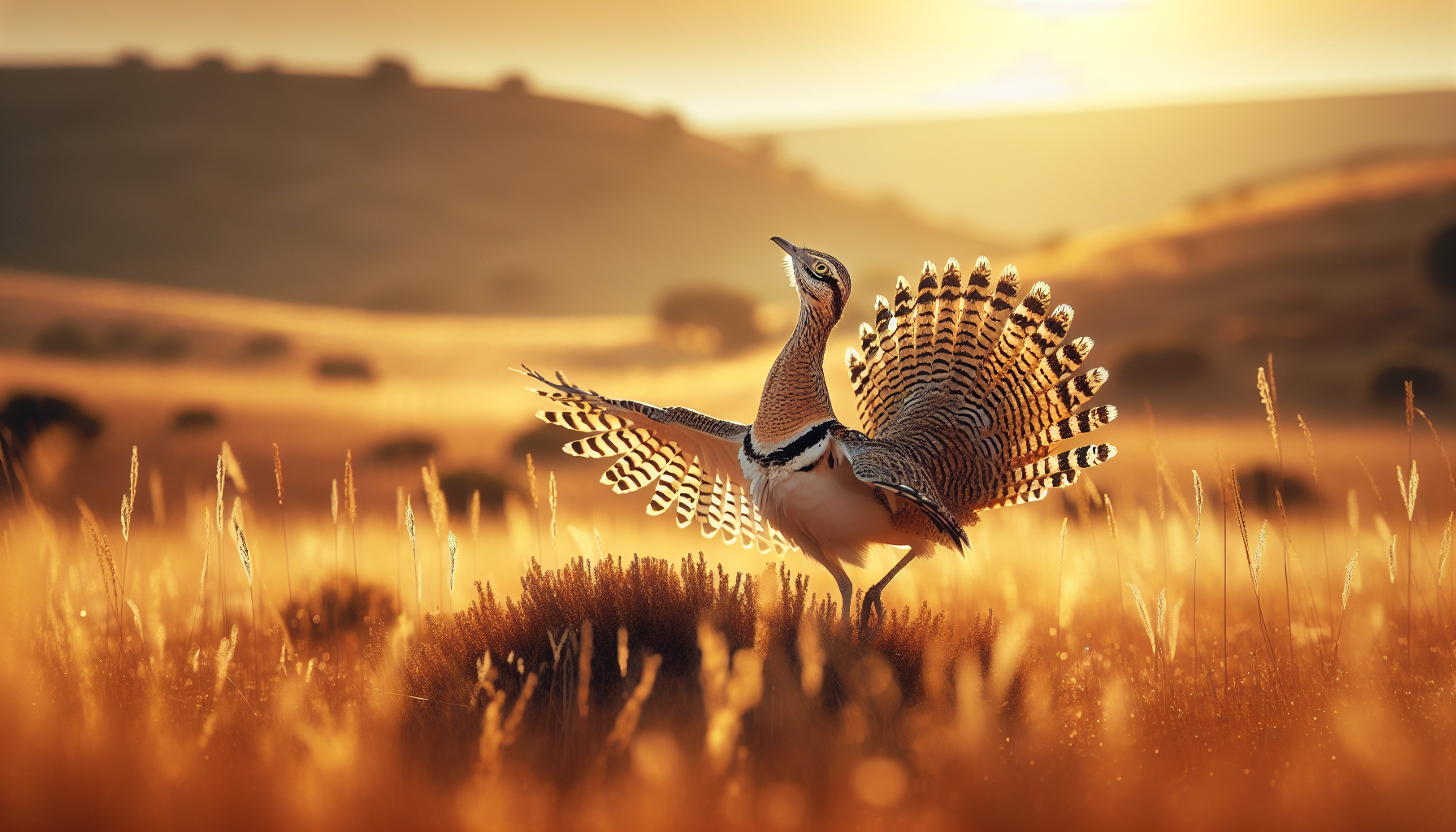
April brings a natural spectacle to the dehesas of Cáceres. Here, the Tetrax tetrax, known as the Common Bustard, becomes the star of a courtship ritual that leaves no one indifferent who is lucky enough to witness it. This small inhabitant of the dehesas showcases its charms in an environment that combines oaks and grasslands, a habitat it has learned to master. The interaction between wildlife and human activity in this landscape is an example of balance that has endured over the years.
In the early hours of the day, when the dew still covers the grass and the air is fresh, the males of the Common Bustard begin their display. With their neck feathers ruffled, they perform energetic jumps and emit guttural sounds that resonate in the morning silence. This behavior is a demonstration of strength and vitality, aimed at attracting females who observe from a distance. The morning light, filtering through the branches of the oaks, adds a magical aura to this nuptial dance.
Spring Behavior
The Common Bustard, a medium-sized bird from the Otididae family, transforms in spring. The males, with their ruffled neck feathers and energetic jumps, seek to impress the females. This behavior is not only a visual spectacle but also a display of their adaptation to the environment. Their diet, rich in insects, seeds, and tender shoots, reflects their ability to thrive in the dehesas and agricultural areas of Cáceres.
The Extremadura dehesa, a unique agroforestry ecosystem, is the perfect setting for these displays. With open grasslands and scattered oaks, it offers ample shelter and food. The mild temperatures of April, ranging from 12°C to 22°C, along with occasional rains, create a favorable environment for the Bustard to exhibit its most characteristic behavior, attracting birdwatchers from all over.
Equipment and Viewing Points
For those wishing to observe the Common Bustard, 8x42 binoculars are indispensable allies, allowing for clear and stable viewing. Neutral-colored clothing and good boots are essential for moving without disturbing the birds. The secondary roads of Cáceres are ideal routes for observation, especially at dawn and dusk, times when Bustard activity is most intense.
It is crucial to respect conservation rules, staying on marked paths and avoiding disturbing the natural behavior of the wildlife. The natural viewpoints of Monfragüe National Park are strategic points not only for the Bustard but also for other emblematic species of the region, offering an unparalleled observation experience.
The Dehesa: A Model of Sustainability
The dehesas of Cáceres are more than a refuge for the Common Bustard; they are an example of sustainability that has withstood the test of time. This landscape, a result of traditional management that combines extensive livestock farming and biodiversity conservation, is a witness to the harmonious interaction between man and nature. The oaks and cork oaks that dot the land are part of a legacy that has allowed the coexistence of wildlife with human activity.
Historically, the dehesa has been vital for local communities, providing wood, cork, and pastures. This multifunctionality has been key to preserving a crucial habitat for many species, not just the Common Bustard. Birdwatching in this context is like looking through a window into the past, where nature and culture intertwine in a balance that remains relevant today.
A Walk Through History and Nature
Venturing into the dehesas of Cáceres in search of the Common Bustard is more than just a simple observation activity. It is an immersion in a landscape where natural beauty merges with the cultural richness of the region. Observers not only enjoy the spring splendor of the Bustard but also become participants in the conservation of a unique ecosystem. Respecting and appreciating this environment is essential for future generations to continue marveling at the Common Bustard in its natural habitat.
As the sun sets, shadows lengthen, and the songs of the birds blend with the gentle whisper of the wind among the branches. It is in these moments of stillness, when nature seems to pause, that one can truly appreciate the magnificence of the dehesas of Cáceres. Observing the Common Bustard becomes an experience that transcends the visual, connecting the observer with the heartbeat of the Extremadura land.