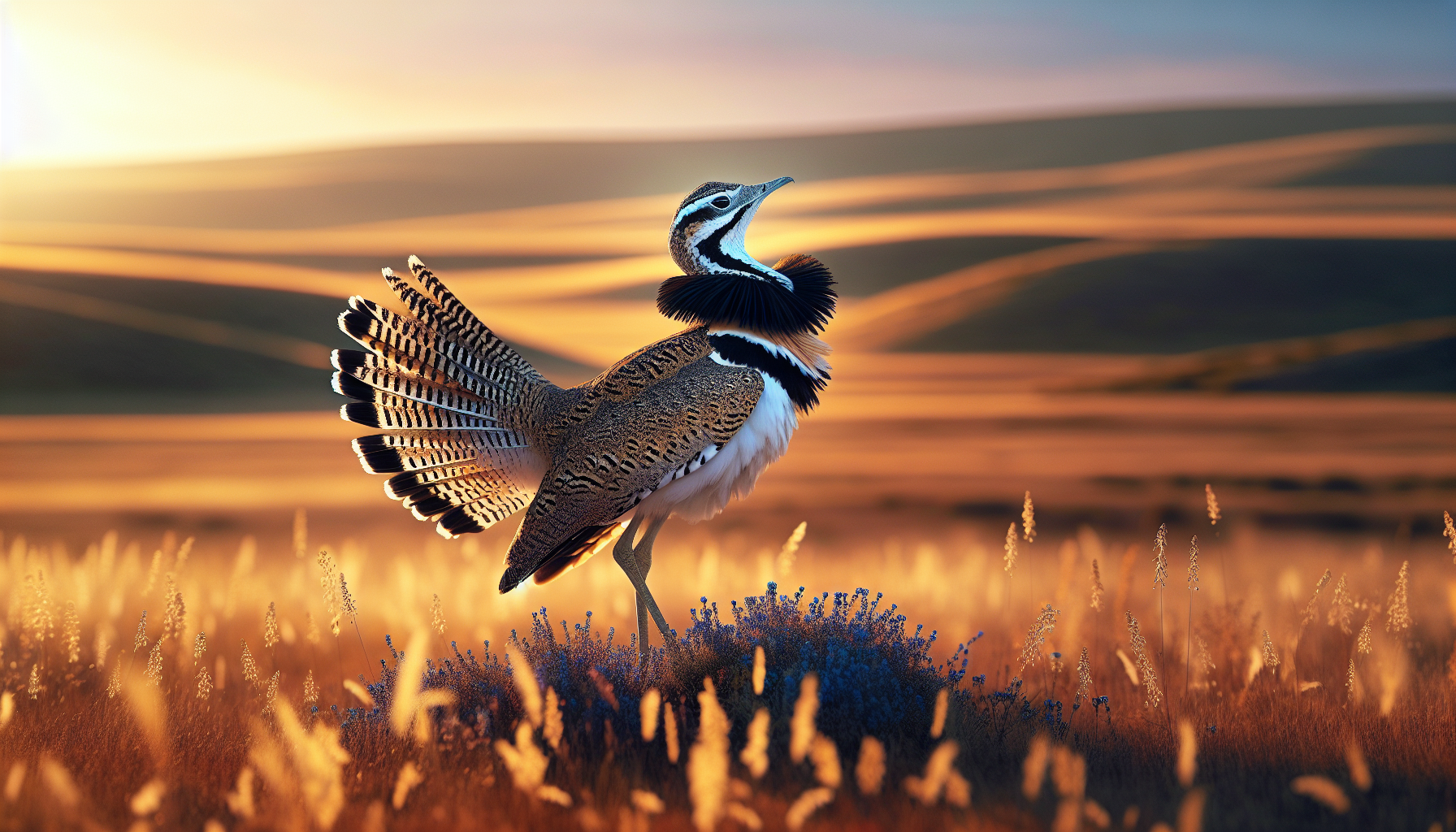
Spring in Extremadura is a rebirth, an explosion of life that unfolds with strength. The dehesas, those landscapes of oaks and grasslands, become the perfect setting for the common bustard (Tetrax tetrax), whose presence is a delight for those who know how to look. This bird, which finds an ideal refuge in the dehesas of Extremadura, takes advantage of the richness of these ecosystems to carry out its reproductive cycle.
With the arrival of April, male bustards begin their courtship rituals, a spectacle that combines choreographed movements and resonant vocalizations. It is not just about attracting females, but also about establishing territories in an environment where competition is intense. The bustard, with its cryptic plumage, transforms during this time. Males display a black collar that contrasts with their earthy plumage, standing out in the landscape.
The behavior of the bustard is fascinating. During the mating season, males perform jumps and short flights, accompanied by a peculiar song that resonates in the dehesas. This song, a mix of claps and whistles, is a call that can be heard in the early hours of the day, when the light of dawn paints the horizon in warm tones. Its diet, based on insects and seeds, makes it an efficient forager, adapted to the seasonal changes of the landscape.
The conservation of the dehesas is vital for the survival of the common bustard. These mosaics of crops and grasslands are fragile in the face of changes in land use. Agricultural expansion and urbanization threaten to fragment these habitats, putting at risk not only the bustard but all the biodiversity that depends on them. Sustainable land management, which combines agricultural production with biodiversity conservation, is essential to maintain the balance of these ecosystems.
Extremadura, with its vast dehesas in Cáceres and Badajoz, offers some of the best places to spot the bustard in its natural environment. Equipped with binoculars and a bird guide, observers travel the back roads that wind through these landscapes, searching for the subtle movement of these birds among the grass. Wearing neutral-colored clothing and maintaining a respectful distance is crucial to avoid disturbing the birds during this critical period.
The common bustard is not just an inhabitant of the dehesas; it is a symbol of the health of these agricultural ecosystems. Its presence is an indicator of biodiversity and sustainable land management. In recent years, bustard watching has become a popular activity among ecotourists, who find in Extremadura a unique destination for birdwatching. This type of tourism, which promotes conservation through responsible appreciation of local wildlife, contributes to the economic development of the region and fosters greater awareness of the importance of preserving these habitats.
In the heart of Extremadura, the dehesas witness a natural cycle that repeats with precision every spring. Life in these landscapes moves to the rhythm of the seasons, and the bustard is one of its most charismatic protagonists. In the early hours of the day, when the dew still covers the grass, the song of the bustard becomes the soundtrack of an ecosystem awakening. Birdwatchers, both locals and visitors, find in this spectacle a deep connection with nature.
The dehesas of Cáceres and Badajoz are a mosaic of biodiversity, where each species plays a crucial role. The bustard, with its adaptability, is an example of how wildlife can thrive in harmony with agricultural practices. However, this harmony is fragile. The pressure on land use remains a constant threat, and a concerted effort is required to ensure that these landscapes continue to be a refuge for wildlife.
The commitment to conserving the dehesas not only benefits the common bustard but also preserves a cultural and ecological legacy that defines Extremadura. The region, known for its rich history and traditions, finds in the conservation of its natural environment a way to honor its past while looking to the future. Local communities, aware of the importance of their natural heritage, actively participate in conservation initiatives aimed at protecting these unique landscapes.
Spring in Extremadura is an invitation to immerse oneself in nature, to listen to the song of the bustard, and to witness a vital cycle that repeats year after year. Protecting its habitat ensures not only the survival of the common bustard but also an invaluable cultural and ecological legacy for future generations. In the dehesas, where time seems to stand still, the bustard reminds us of the beauty and fragility of nature, and the responsibility we have to care for it.