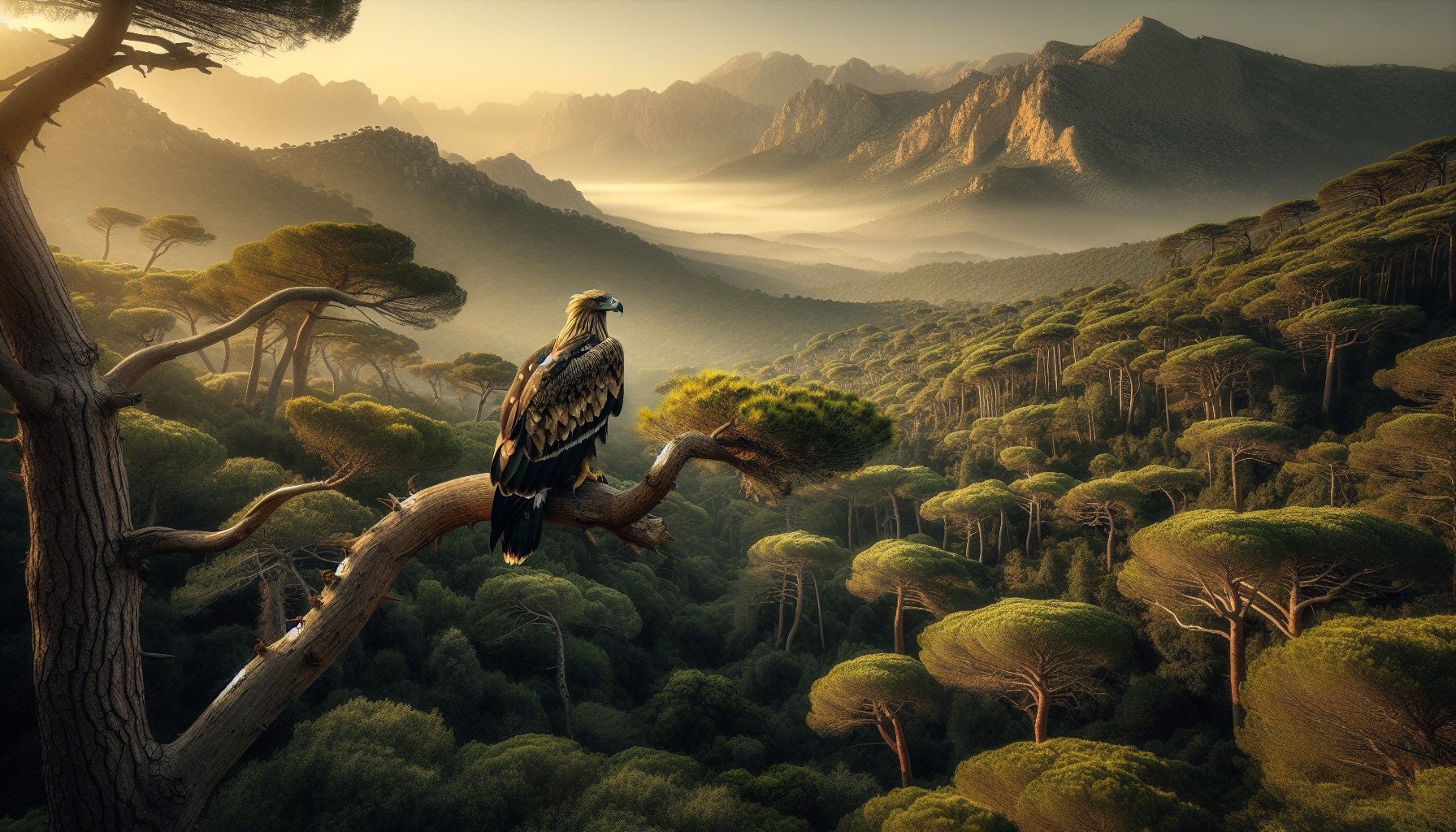
In the heart of Extremadura, Monfragüe National Park transforms every April into a vibrant stage of life and color. The gentle hills and deep valleys don a lush green, dotted with the white and pink of wildflowers that emerge with spring. This idyllic landscape, however, is more than just a visual spectacle; it is home to one of the most majestic birds in Europe: the Iberian imperial eagle (Aquila adalberti).
This month is particularly significant for the imperial eagles, as it marks the beginning of their breeding season. High in the oak and cork forests, these birds build their nests, impressive structures made of branches and leaves that can reach up to two meters in diameter. From these elevated vantage points, the adults vigilantly monitor their territory, ready to defend it against any intruder. Nest construction is a meticulous process involving both members of the pair, who carefully select each branch and leaf, ensuring the stability and protection necessary for their future chicks.
Monfragüe, designated as a National Park in 2007, is a vital refuge for these eagles. Its Mediterranean forest ecosystem provides the perfect habitat, with an abundance of prey and safe nesting sites. However, the survival of the Iberian imperial eagle is not guaranteed. Classified as vulnerable, this species faces constant threats, primarily habitat loss and the decline of its main prey, the European rabbit. Diseases affecting rabbit populations, such as myxomatosis and viral hemorrhagic disease, have drastically reduced their numbers, directly impacting the eagles' food supply.
During April, the behavior of the eagles is a ballet of precision and ferocity. The pairs take turns hunting and feeding their eagerly awaiting chicks in the nest. The diet of these birds is varied, although rabbits are their preferred prey due to their abundance and ease of capture. Nevertheless, in times of scarcity, eagles do not hesitate to hunt pigeons, lizards, and even small mammals. The ability of these birds to adapt to the changing conditions of their environment is a testament to their resilience and determination.
Observing these birds in their natural habitat is an unparalleled experience. Visitors to Monfragüe witness how these creatures spread their wings with a wingspan that can exceed two meters, soaring through the skies with an elegance and power that takes one's breath away. For birdwatching enthusiasts, April is the best month to visit the park and enjoy this spectacle. The arrival of dawn in Monfragüe is a magical moment when the sun begins to illuminate the cliffs and shadows dissipate, revealing the majesty of the landscape and the flight of the eagles.
The viewpoint at Portilla del Tiétar is one of the most popular spots for birdwatching. From here, visitors can observe not only the imperial eagles but also other raptors such as the griffon vulture and the Egyptian vulture. The Monfragüe Castle, an ancient Arab fortress, offers another impressive perspective. From its walls, one can gaze upon the vast landscape of the park, a mosaic of greens and browns stretching as far as the eye can see. The history of the castle, with its legends of ancient inhabitants and battles, adds a layer of mystery and charm to the observation experience.
It is important for visitors to respect the park's rules to ensure the protection of the wildlife. Staying on designated paths and maintaining silence are essential measures to avoid disturbing the birds during this critical period of their life cycle. Education and awareness about the importance of conserving these habitats are fundamental to ensuring the future of the imperial eagles and other species that inhabit the park.
Observing the Iberian imperial eagle in Monfragüe is more than just a recreational activity; it is a reminder of the fragility of our natural environment. Each flight, each call, and each interaction between these birds is a testament to the delicate dance of life unfolding in this corner of Extremadura. Witnessing this spectacle is a privilege that connects us with nature in its purest form, reminding us of the importance of conserving these spaces so that future generations can also marvel at the majesty of the Iberian imperial eagle. The connection with nature experienced in Monfragüe is a reminder of our shared responsibility in protecting and preserving the natural treasures that surround us.