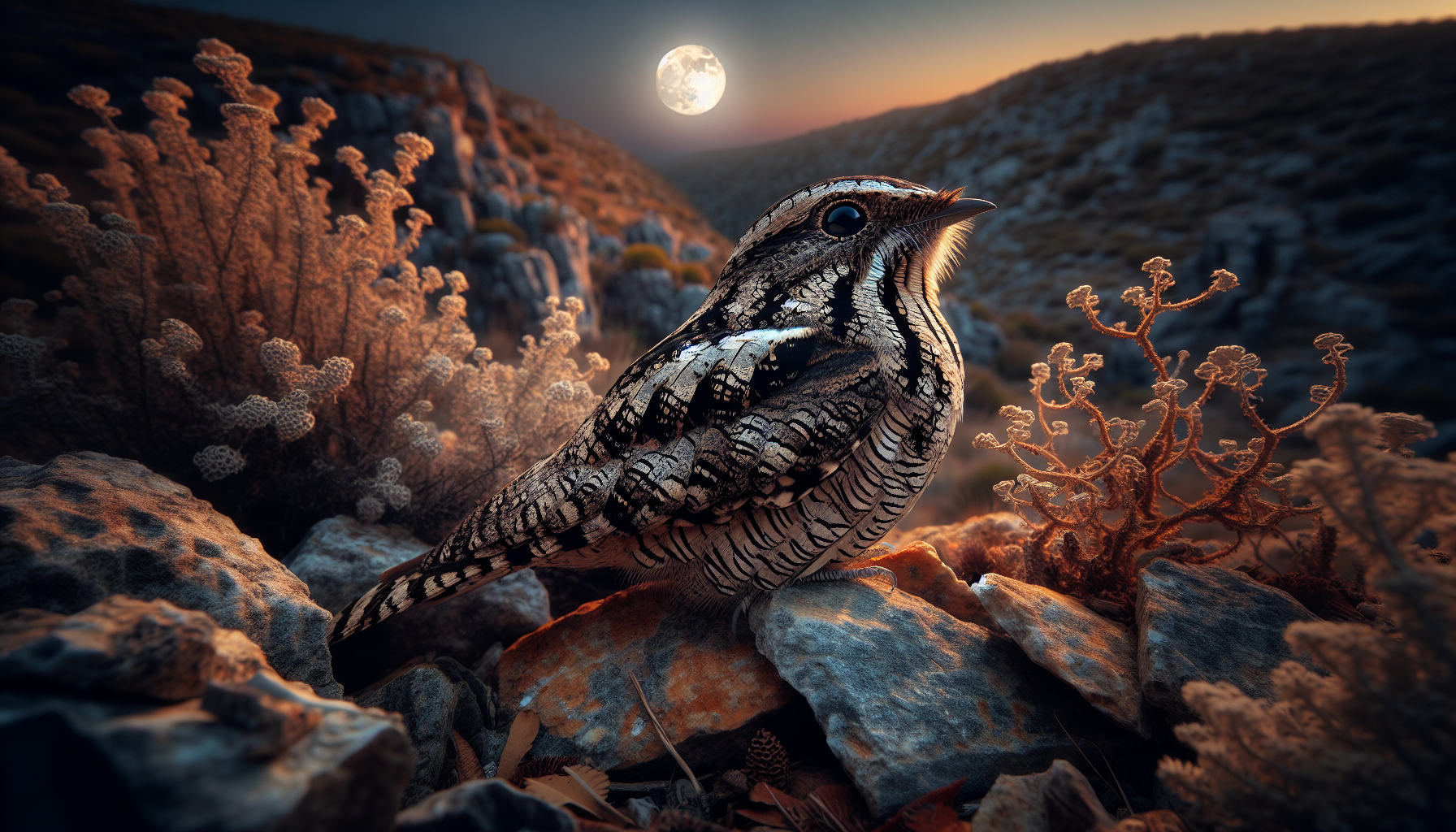
In the heart of the Gata Mountains, a hidden corner teeming with life north of Extremadura, the red-necked nightjar (_Caprimulgus ruficollis_) becomes a silent protagonist of spring nights. This bird, which camouflages itself with its surroundings in an almost magical way, is a living testament to the natural richness of the region. April marks a crucial moment in its life cycle when climatic conditions and the landscape align to provide a perfect setting for its reproduction.
The red-necked nightjar is a master of camouflage. Its cryptic plumage allows it to blend in with the ground covered in dry leaves and branches, making it a challenge for inexperienced observers. During the day, it remains motionless, almost invisible, but as the sun begins to hide behind the mountains, the bird awakens. Its activity intensifies at nightfall, as it takes to the air silently and agilely in search of flying insects, primarily moths and beetles, which make up its main diet. This nocturnal behavior is not only a hunting strategy but also a way to avoid predators.
The song of the nightjar, a series of low and repetitive notes, resonates in the cool night air, creating a mystical atmosphere that envelops the oak and holm oak forests. This sound, which may seem monotonous at first listen, has a hypnotic effect, inviting those who hear it to pause and contemplate the beauty of nature in its purest state.
The Gata Mountains, with their mosaic of landscapes including forests, scrublands, and rocky terrain, are the perfect home for the red-necked nightjar. The combination of open areas for hunting and natural shelters for nesting provides an ideal balance between protection and resources. This environment has been shaped by centuries of interaction between humans and nature, creating a unique ecosystem that hosts rich biodiversity, from other bird species to mammals and endemic plants.
For birdwatching enthusiasts, the Gata Mountains offer an unparalleled experience. The best time to observe the nightjar is at dusk when its activity is most intense. Equipping oneself with binoculars that perform well in low light is essential, as is wearing appropriate clothing for the rapidly dropping temperatures after sunset. Marked trails lead to strategic viewpoints and open areas ideal for observation, always respecting conservation rules to avoid disturbing the birds, especially during their nesting period.
Secondary roads near the towns of Hoyos and Acebo are recommended access points that allow easy entry into the nightjar's habitat. These paths wind through landscapes that seem straight out of a storybook, where nature displays itself in all its splendor. By traversing these routes, one not only has the opportunity to observe this enigmatic species but also to enjoy the rich biodiversity and unique landscapes of the region.
The experience of observing the red-necked nightjar in the Gata Mountains goes beyond the visual. It is an intimate encounter with nature, a moment that invites reflection on the importance of preserving these environments. As one ventures into these landscapes at dusk, a unique species is discovered, and a sensory experience unfolds that highlights the natural richness of Extremadura.
The connection with nature in the Gata Mountains is palpable. The silence of the evening, broken only by the song of the nightjar, creates an atmosphere that invites contemplation. The shadows of the oaks and holm oaks stretch long, and the cool air carries the aroma of the earth and vegetation. This environment, which has witnessed the life and history of the region, becomes a sanctuary for those seeking an authentic and profound experience.
The red-necked nightjar, with its hypnotic song and nocturnal behavior, serves as a reminder of the natural wealth that Extremadura harbors. By exploring these landscapes at dusk, one not only discovers a unique species but also embarks on a sensory journey that invites reflection on the importance of preserving our natural environments.