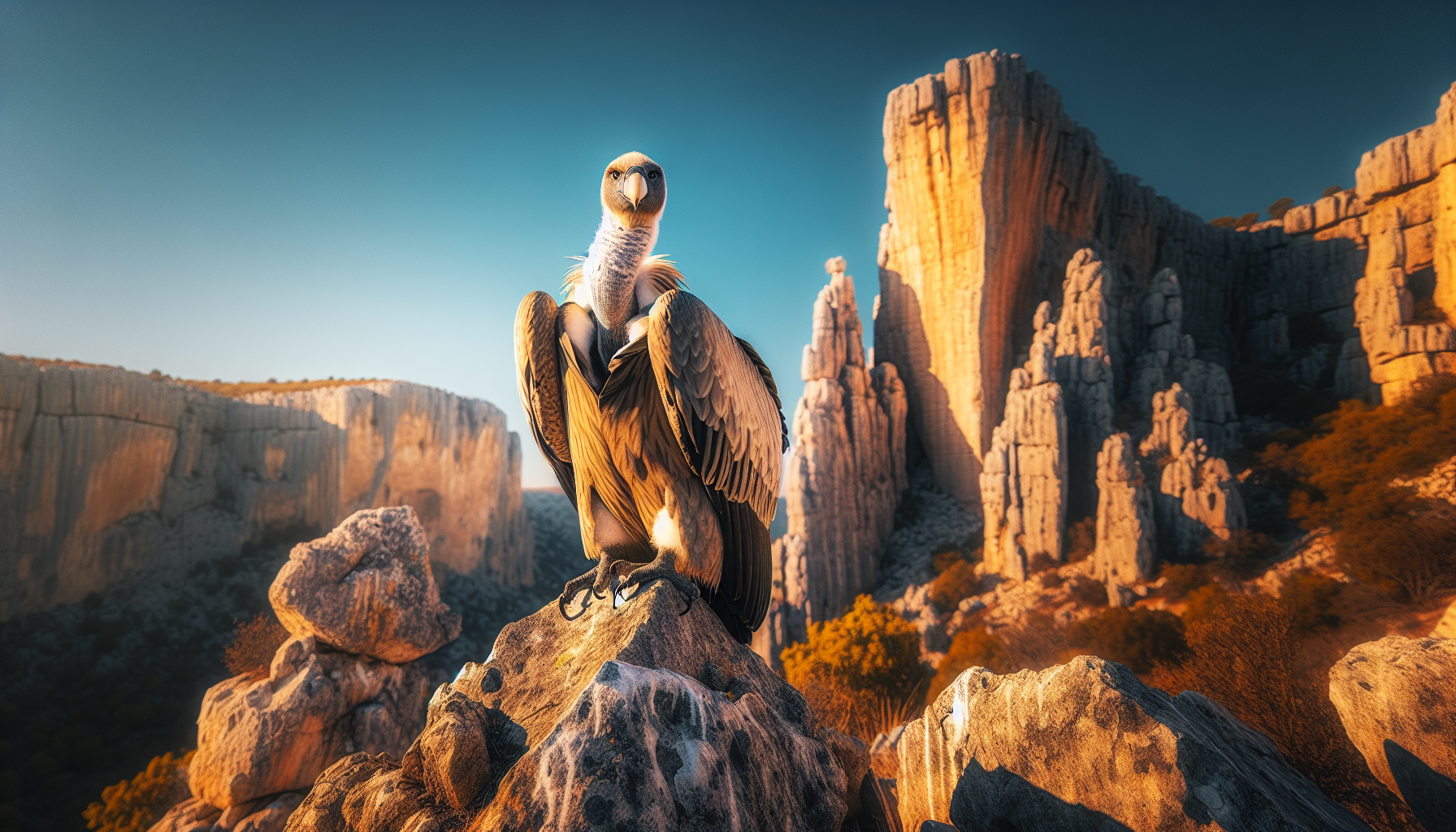
In the heart of Extremadura, Monfragüe National Park stands as a sanctuary for avifauna, particularly highlighting the majestic Griffon vulture (Gyps fulvus). Every April, this park transforms into a vibrant stage where the reproductive activity of these scavenging birds becomes a natural spectacle that attracts naturalists and tourists from all over. Amid the rugged cliffs and the constant murmur of the Tagus River, wildlife unfolds its magic in a way that only nature can offer.
With a wingspan that can exceed 2.5 meters, the Griffon vulture is one of the most imposing scavengers on the Iberian Peninsula. During April, their colonies are in full reproductive process, establishing nests on steep cliffs. These nests, built with twigs and leaves, house a single egg that the parents incubate for about 55 days. The location on high cliffs not only provides safety from predators but also offers a strategic point for launching into the search for food.
The diet of the Griffon vulture consists almost exclusively of carrion, playing an essential role in recycling organic matter within the ecosystem. Thanks to their keen eyesight, they can detect food sources from long distances, gathering in groups to feed. This not only helps to clean large areas of animal remains but also prevents the spread of diseases by quickly eliminating carcasses.
Monfragüe, declared a National Park in 2007, is a space of extraordinary biodiversity. It houses one of the largest colonies of Griffon vultures in Europe, alongside other emblematic species such as the Iberian imperial eagle and the Iberian lynx. This natural environment, dominated by extensive cork oak and holm oak forests, intertwines with human history, being home to ancient settlements that left their mark in the form of rock paintings and medieval castles.
The climate of the region, characterized by mild winters and hot summers, along with the geomorphology of the terrain, creates an ideal habitat for avifauna. The Tagus and Tiétar rivers, which flow through the park, offer not only stunning landscapes but also a vital resource for the species that inhabit their banks.
April is an ideal month to observe the Griffon vulture due to the pleasant temperatures and the visible activity of the colonies. It is recommended to bring binoculars of at least 10x42 and, if possible, a spotting scope for more detailed views of the nesting areas. It is advisable to wear neutral-colored clothing and bring a hat for sun protection.
The most recommended areas for observation include the iconic viewpoint of Salto del Gitano, where the imposing cliffs provide a perfect nesting habitat. From here, one can see the majestic flights of the vultures as they soar over the landscape. The vicinity of the Tagus River is also a strategic point for spotting vultures descending to feed. It is crucial to maintain a prudent distance from the nesting colonies to avoid disturbing the birds and to always follow the park's conservation rules.
Observing the Griffon vulture in Monfragüe is an experience that connects visitors with nature in its purest state. This majestic scavenger is not only a symbol of the park's biodiversity but also a reminder of the delicate balance that sustains ecosystems. With each flight and each meal, the Griffon vulture plays an irreplaceable role in the cycle of life, offering those who observe it a lesson in harmony and resilience in nature.
In Serradilla and Torrejón el Rubio, towns near the park, life continues at the rhythm of the seasons. The locals, accustomed to the presence of these birds, consider them part of the everyday landscape, a constant reminder of the natural wealth that surrounds them. Monfragüe is not just a destination for bird lovers; it is a place where nature and culture intertwine, offering a unique experience to those who venture along its trails.
Walking the trails of Monfragüe is to enter a world where time seems to stand still. The paths wind through forests of holm oaks and cork oaks, and each bend in the trail offers a new perspective of the landscape. The sounds of nature are omnipresent: the songs of birds, the whisper of the wind among the leaves, and occasionally, the distant cawing of a Griffon vulture gliding in the sky.
The park is not only a refuge for wildlife but also a space for reflection and personal connection with nature. Each visitor brings their expectations and leaves with a unique experience, enriched by direct contact with a vibrant and lively ecosystem. Monfragüe is undoubtedly a place where nature displays its splendor in every corner, inviting those who visit to be part of its story.