A turbulent April
April in Tierra de Barros is a spectacle for the senses. During this time, the skies come alive with the arrival of the lesser kestrel (_Falco naumanni_), a small raptor that, with its agile flight and sharp gaze, soars through the air in search of a place to rest and feed. The vast plains of this Extremaduran region become its temporary refuge, a stage where nature and agriculture intertwine in an ancestral dance.
The arrival of the lesser kestrel coincides with the explosion of colors that characterizes spring in Tierra de Barros. The fields are painted green and yellow, with cereal crops stretching as far as the eye can see. In these lands, where agricultural work has shaped the landscape for centuries, the kestrel finds a favorable environment for its survival.
Adaptation to the landscapes of Tierra de Barros
The lesser kestrel has found a perfect temporary home in the open landscapes of Tierra de Barros. Here, agricultural activities create a mosaic of opportunities for this raptor. The cereal fields and uncultivated areas become its pantry, where insects and small rodents abound. This environment, dominated by human work, is not alien to the birds, which have learned to coexist and thrive within it.
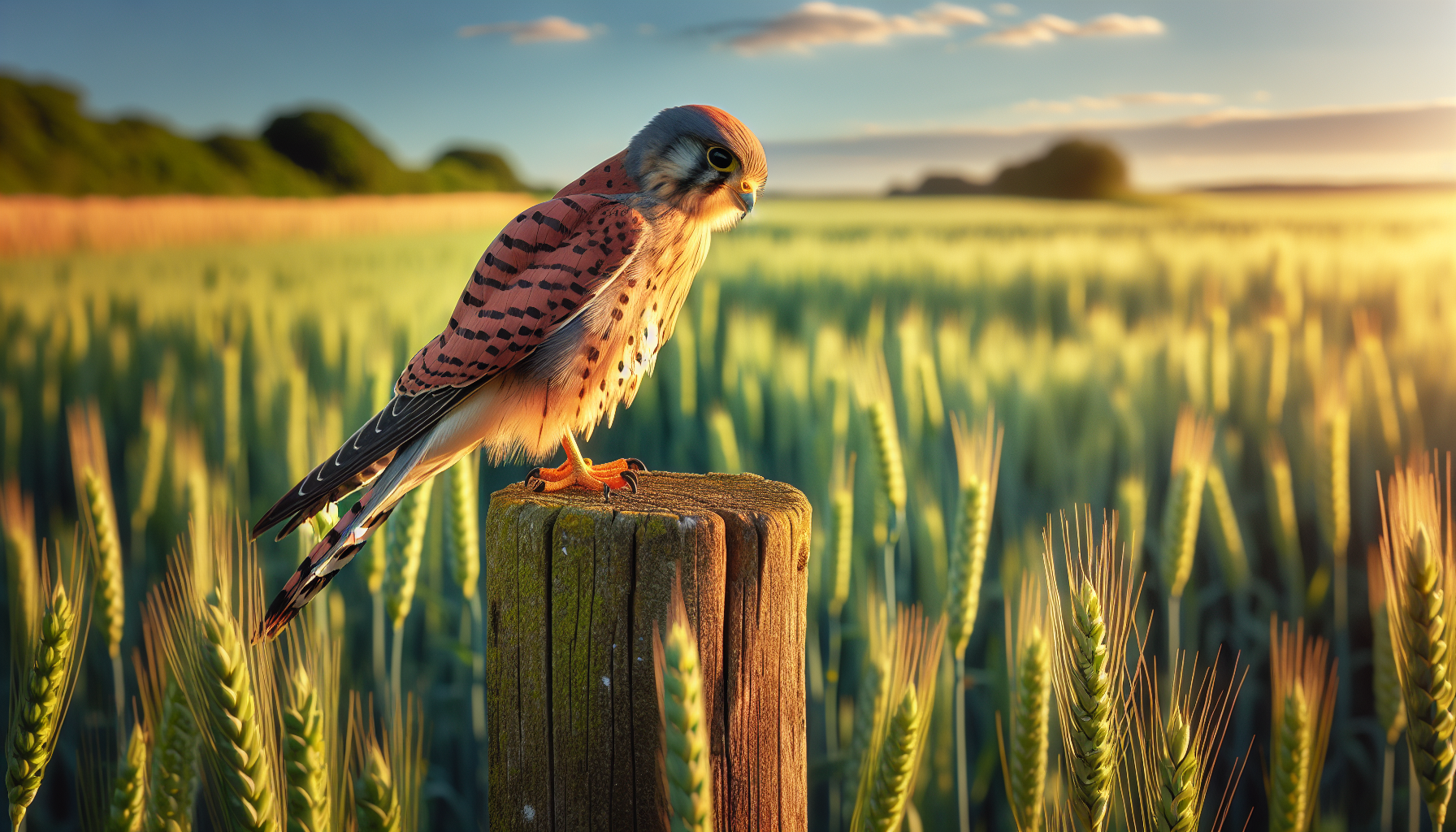
With its compact size and dynamic flight, the lesser kestrel moves skillfully among the fields. The males, with their reddish plumage and bluish heads, are a visual spectacle that contrasts with the females and juveniles, which have more muted tones. This difference in colors not only facilitates identification but also adds a touch of beauty to their observation.
The presence of the lesser kestrel in Tierra de Barros is not only a delight for birdwatchers but also represents an indicator of the health of the local ecosystem. The coexistence of this species with traditional agricultural practices is a testament to the resilience of nature and the importance of maintaining a balance between human development and conservation.
Survival strategies during migration
During its migration, the lesser kestrel adapts to changes in the landscape. It uses posts and human structures as observation points from which to locate its prey. This ability to adapt to environments modified by humans has been crucial for its survival. Spring is a period of intense activity, where the search for food combines with preparation for the breeding season.
In the warmest hours of the day, when the sun shines brightly over the plains, it is common to see these small falcons gliding over the fields, taking advantage of thermal currents to rise effortlessly. This skill in utilizing environmental conditions is one of the reasons why the lesser kestrel has been able to thrive in a constantly changing world.
Tips for observation
For those wishing to observe this species, it is advisable to bring binoculars of 8x or 10x. The early hours of the day and twilight are the ideal moments to see the lesser kestrel in action. Wearing neutral-colored clothing helps minimize disturbance to local wildlife. In the vicinity of Almendralejo, secondary roads between cereal fields and near old buildings such as barns and mills offer excellent observation points. It is essential to respect local conservation rules, avoiding access to private properties without permission and maintaining discreet behavior.
The experience of observing the lesser kestrel in its natural habitat is enriching and offers a unique connection with nature. In a world where technology often distances us from the natural, pausing to observe these fleeting moments reminds us of the beauty and fragility of the world around us.
An ancestral journey
The passage of the lesser kestrel through Tierra de Barros is a reminder of the natural wealth that Extremadura offers. Observing this species in its natural habitat connects us with the vital cycle of nature, a cycle that repeats with precision and beauty each year. In this corner of Spain, the lesser kestrel invites us to pause and observe, to witness a journey that, although ancestral, never ceases to amaze.
The migration of the lesser kestrel is a phenomenon that transcends the simple act of moving from one place to another. It is a journey that symbolizes the continuity of life and the interdependence between species and their habitats. In Tierra de Barros, this small raptor teaches us that, despite challenges, nature always finds a way to persist and thrive.