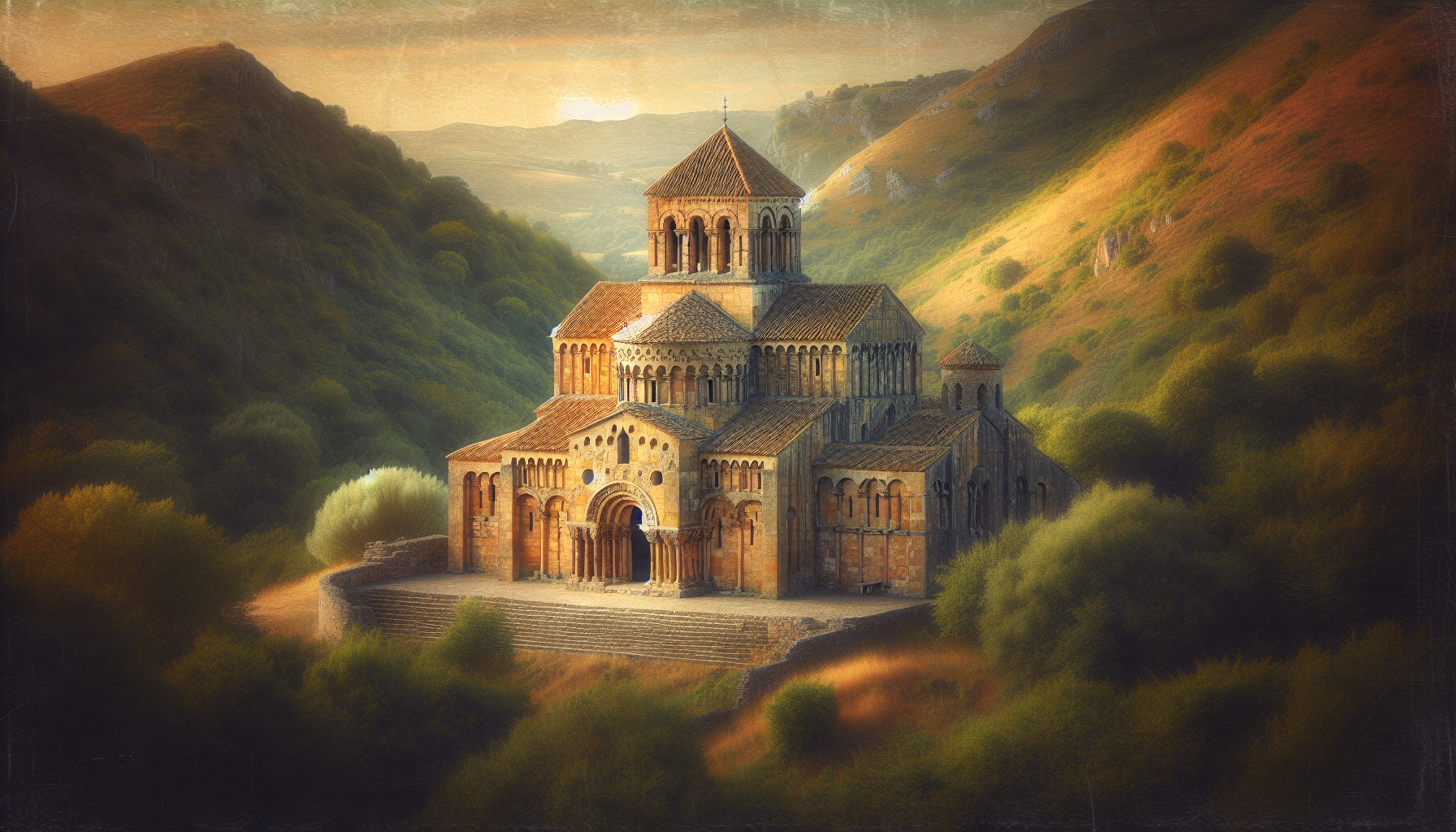
In the heart of Cáceres, amidst the rolling landscapes of Alcuéscar, stands the Basilica of Santa Lucía del Trampal, an architectural treasure that has withstood the test of time. This monument, dating back to the 7th century, is one of the few examples of Visigothic architecture that remain in the Iberian Peninsula, and its existence is a testament to the complex cultural interactions that defined this region during a period of great transformations.
The history of Extremadura in the 7th century is a story of transition. With the fall of the Western Roman Empire, the region became a crossroads, a place where diverse cultural influences converged. The Visigoths, who had established their dominance in the Peninsula, brought with them a new worldview and a religious architecture that reflected their identity and faith. The Basilica of Santa Lucía del Trampal is a prominent example of this architecture, with its Latin cross plan and opposing apses, evoking Roman tradition but with its own character.
The sobriety of the basilica's design is deceptive. At first glance, its simplicity may seem austere, but a closer examination reveals remarkable architectural sophistication. The builders used local materials, a choice that not only speaks to their ability to adapt to available resources but also reflects a deep connection to the environment. The stones of the basilica seem to emerge from the landscape, harmoniously integrating with the hills and valleys that surround it.
The interior of the basilica is equally impressive. The arrangement of the apses and the simplicity of the decoration reflect its original liturgical function, but also an aesthetic that values functionality over excessive ornamentation. Each architectural element has a purpose, and together they create a space that invites reflection and contemplation.
Today, the Basilica of Santa Lucía del Trampal is well-preserved, thanks to 20th-century restorations that have restored part of its original splendor. Located about five kilometers south of the center of Alcuéscar, access is straightforward via the EX-381 road. Visitors who venture to this corner of Cáceres are rewarded with an experience that combines history, culture, and nature.
The site features a small interpretation center that provides detailed information about the historical context of the building and the architectural characteristics of the Visigothic era. This center enriches the visitor experience, offering a deeper understanding of the historical and cultural significance of the basilica. Through informative panels and exhibitions, visitors can explore the complex cultural interactions that shaped Extremadura during this crucial period.
The natural surroundings of the basilica perfectly complement its architecture. The hills and valleys provide an ideal setting for a visit that goes beyond the architectural. Here, history and nature intertwine, creating an experience that invites contemplation and discovery. The whisper of the wind among the stones seems to tell stories of a time when faith and culture were intertwined in a delicate balance.
Preserving sites like the Basilica of Santa Lucía del Trampal is essential to keeping alive the memory of the civilizations that preceded us. This architectural legacy not only connects us with the Visigoths but also invites us to reflect on the role of architecture as a vehicle of cultural identity and a symbol of historical continuity. With each visit, the visitor is transported to a time when cultural boundaries were porous and influences intertwined in complex and fascinating ways.
The Basilica of Santa Lucía del Trampal is more than an architectural monument; it is a testament to the complex cultural interactions that have shaped the history of Extremadura. In its stone walls, one can read the story of a people who knew how to adapt and evolve, integrating diverse influences to create a unique identity. A journey to this corner of Cáceres is a journey to the past, an opportunity to connect with a fundamental part of our cultural heritage.