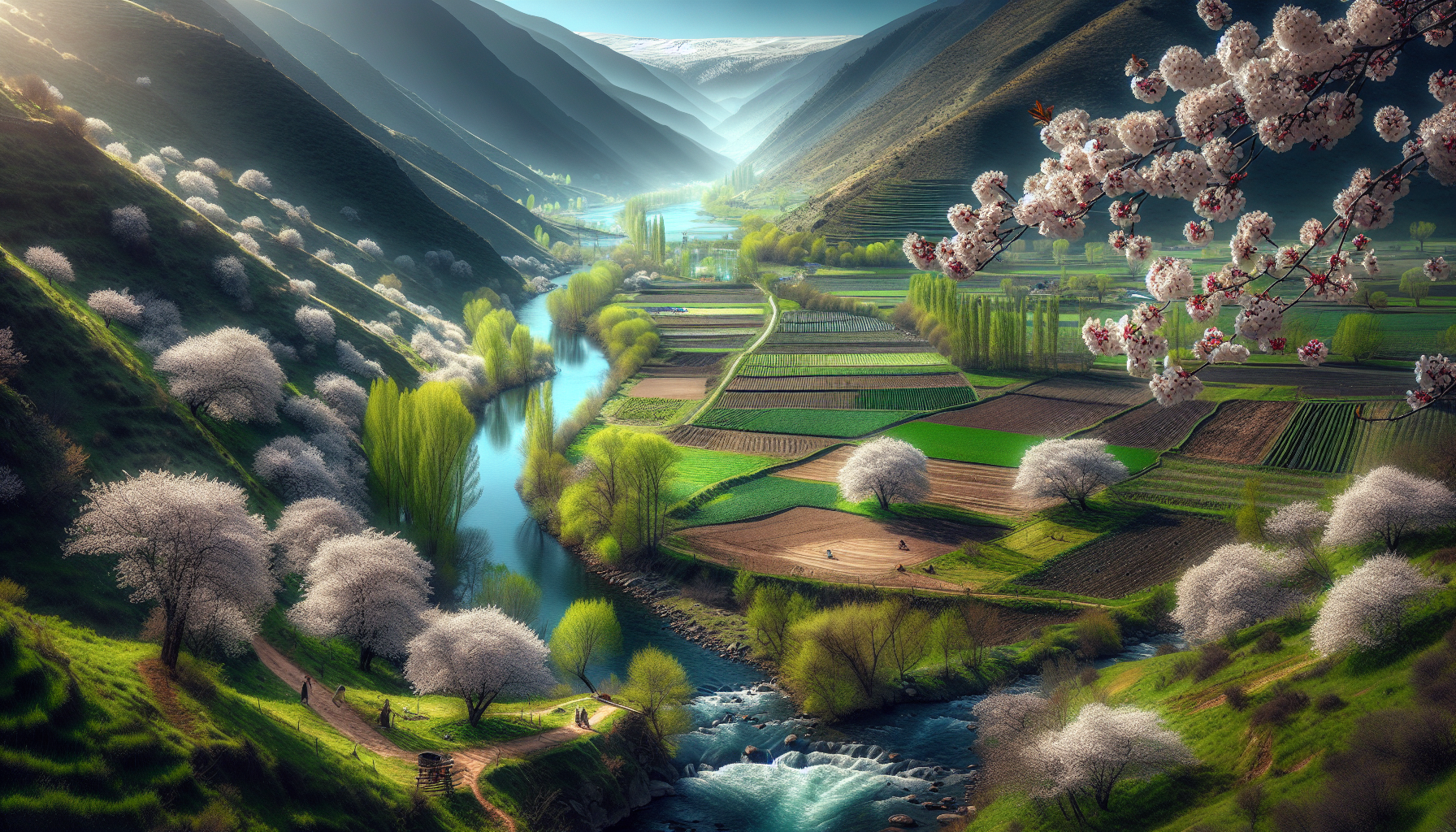
The sun timidly filters through the clouds, creating glimmers on the waters of the Jerte River that, like a thread of life, runs through the valley of the same name. This weekend, the cherry blossom reaches its peak, transforming the landscape into a sea of whites and pinks that attracts gazes and visitors. But it is the water, and not just the flower, that sustains the economy of the land.
The Jerte River, along with the numerous gorges that traverse the territory, such as the Garganta de los Infiernos, are the arteries that keep the region alive. Over the centuries, water has sculpted not only the landscape but also the way of life of its inhabitants. In spring, farmers from Jerte and Cabezuela del Valle take advantage of the abundant water that flows down from the peaks of the Sierra de Tormantos to irrigate their fields. Without this resource, the famous Jerte cherry, recognized for its Denomination of Origin, would not be possible.
In recent decades, reservoirs have played a fundamental role in regulating the flow, ensuring the water needed for agriculture throughout the year. Although the construction of these infrastructures was initially a response to the demands of the agricultural sector, today they have also allowed for the development of nature tourism, a growing economic pillar.
Water not only irrigates crops; it also drives local cooperatives that transform agricultural production into products that travel beyond Extremadura. In Piornal, the cherry cooperative not only packages the fruit but also produces jams and liqueurs that find their place in national and international markets. The water that nourishes the cherry trees is, therefore, a source of wealth that transcends the local sphere.
Moreover, the tourist offer diversifies with activities such as canyoning and hiking, which directly depend on the gorges and their crystal-clear waters. The Natural Park of the Garganta de los Infiernos offers routes that attract thousands of visitors each year, who seek not only the floral display but also direct contact with the natural environment.
As the world faces climate challenges, the Jerte Valley looks to the future with the certainty that water will remain an essential resource. Local communities work to ensure its sustainable management, aware that their economy and way of life depend on it.
Spring advances, and with it, the floral spectacle of Jerte bids farewell. However, the water, silent and constant, continues to flow. In its course, it carries not only the promise of new harvests but also the hope for a balance between development and conservation. In the Jerte Valley, water is more than a resource; it is the very essence of life and land.
Walking through the cobbled streets of Cabezuela del Valle, one can feel the history that seeps from its stone walls. The houses, with their wooden balconies adorned with flowers, seem to observe the comings and goings of visitors, as if they want to share secrets of times past. In Jerte, the murmur of water accompanies locals in their daily routines, reminding them of the close relationship they maintain with the river.
The Jerte Valley is not just a place but a complete sensory experience. The aroma of cherry blossoms mingles with the freshness of the water descending from the mountains, creating an atmosphere that invites contemplation and enjoyment. Visitors, as they traverse its paths, discover hidden corners where time seems to have stopped.
The valley's economy, while centered on agriculture, has adapted to modern times without losing its essence. The small family-run businesses managing rural accommodations and tour guides have found in water an ally to attract an increasingly interested audience in ecotourism and authentic experiences.
In Piornal, the highest village in Extremadura, the cold of winter gives way to a spring that fills its streets with color. Life here flows at a different pace, marked by the cycle of nature and tradition. Local festivals, in which water and land are protagonists, celebrate the identity of a community that has managed to maintain its roots.
Thus, the Jerte Valley stands as an example of how nature and humanity can coexist in harmony. As long as the waters continue to flow, the valley will remain a place where life flourishes in all its forms.